LinkedIn · Hiring · 2019–2021

Hiring

Mobile hiring that fits between the demands of running a business.

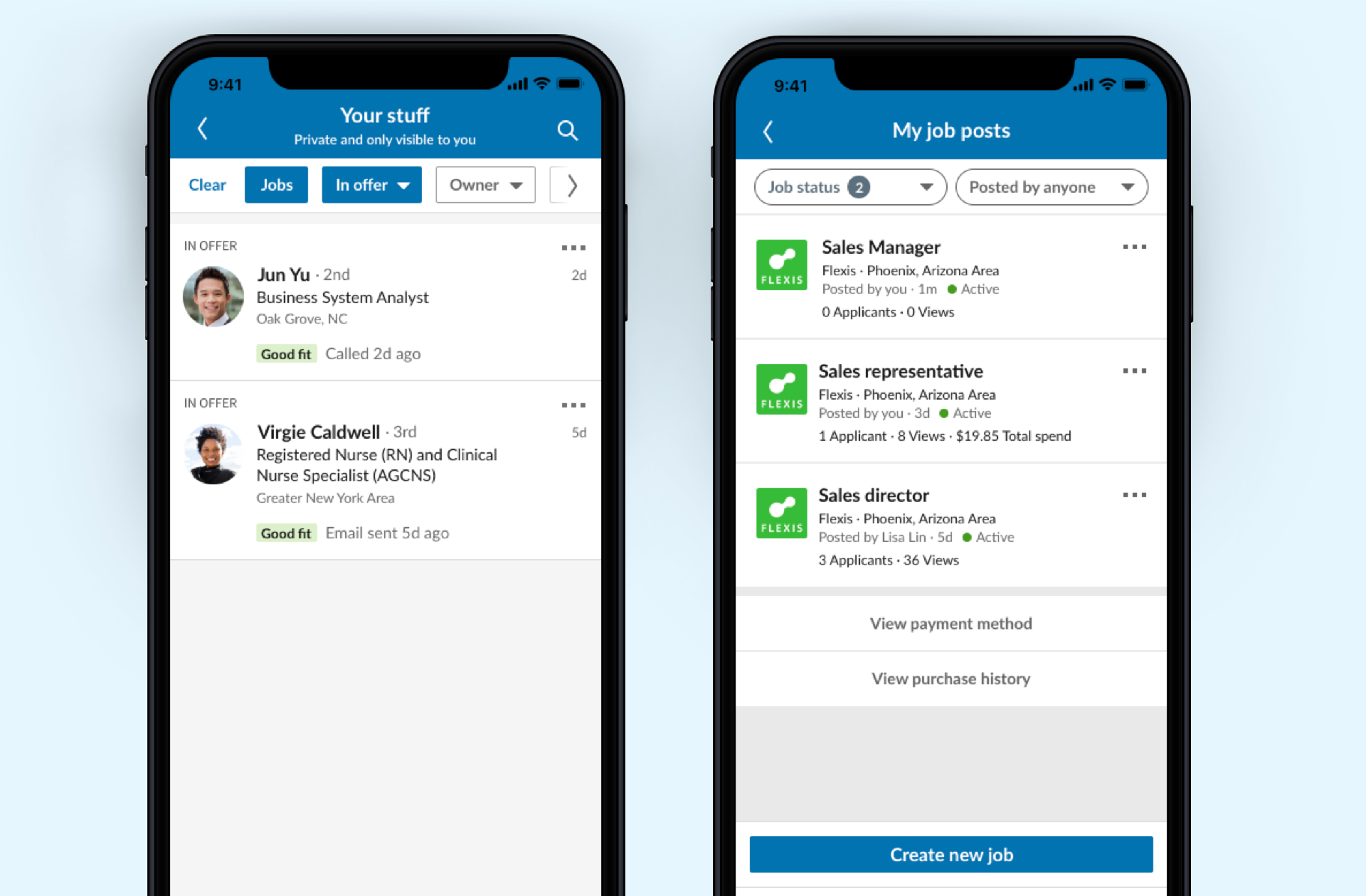
Small-business owners needed to review candidates and respond between other responsibilities. I brought candidate context, ratings, and outreach into a connected mobile hiring flow.

+185%Reported improvement in response rate.

My contribution

I led mobile strategy across iOS and Android, connecting candidate context, ratings, and outreach, then extending the model to a desktop MVP.

01 / Review to outreach

Keep the person and the next action together.

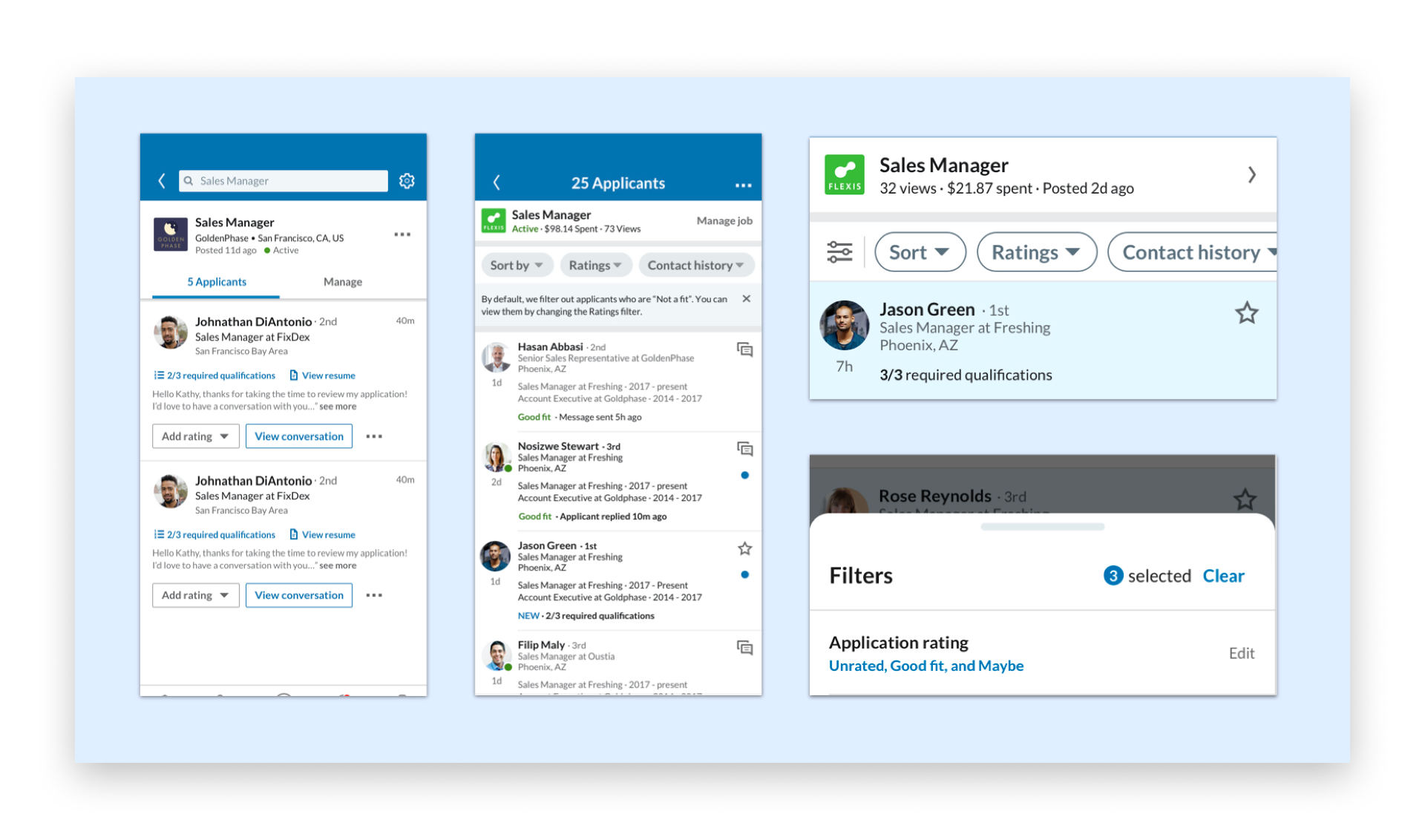
I brought candidate information, ratings, filtering, and outreach into one flow. Owners could review an applicant, narrow their list, and start a conversation.
Applicant review in motionA focused applicant surface for quick, confident decisions.
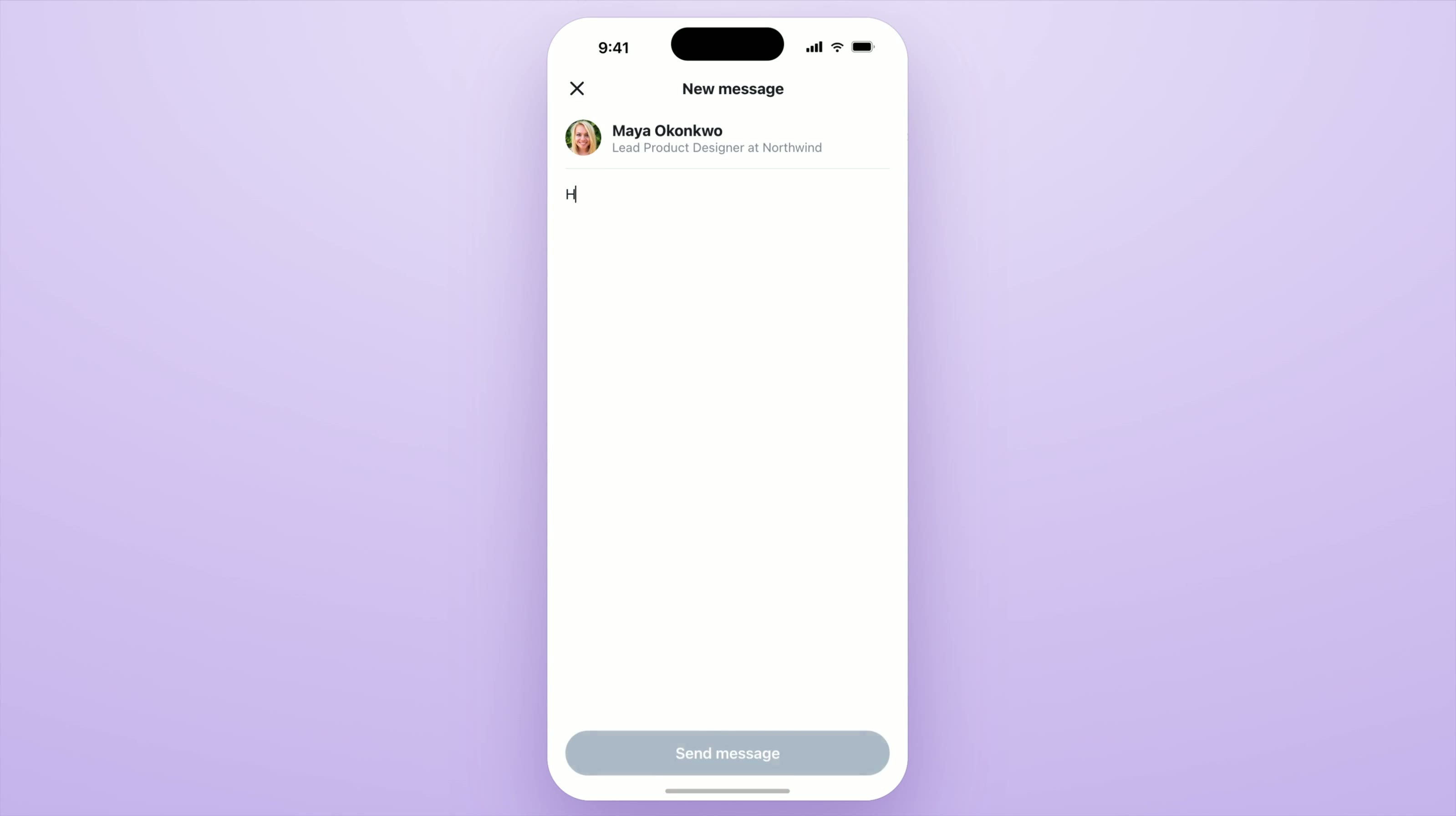
Personal outreachOutreach stays connected to the applicant being reviewed, making the move from assessment to a personal message feel continuous.
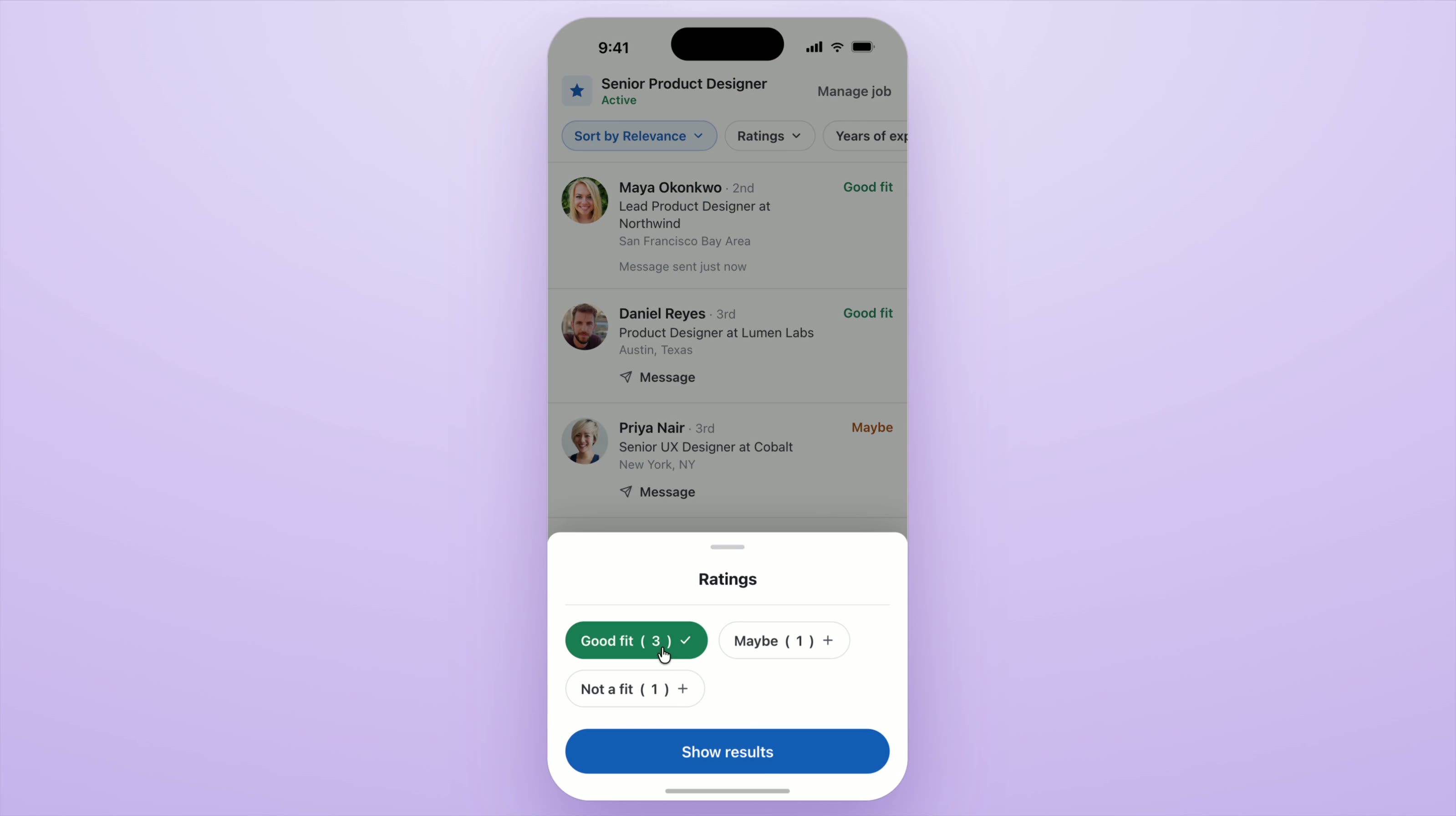
Filtering applicantsApplicant filters bring the relevant candidate signals into the flow, helping an owner narrow the review.
Explore the details
1 / 6
Rate and triageReviewing and acting on an applicant without a long workflow.
Messaging detail
Messaging detailA closer look at the outreach experience.
Relevant filters
Relevant filtersThe signals that support a useful review, without unnecessary complexity.
Considered rejectionsA thoughtful rejection flow that acknowledges the person behind the application.
Managing the jobJob details and settings gathered into an understandable place.
The desktop experienceThe applicant model, filters, and communication patterns scale to a larger surface while keeping the workflow recognizable.
02 / The interaction model

Make review faster without losing the person.

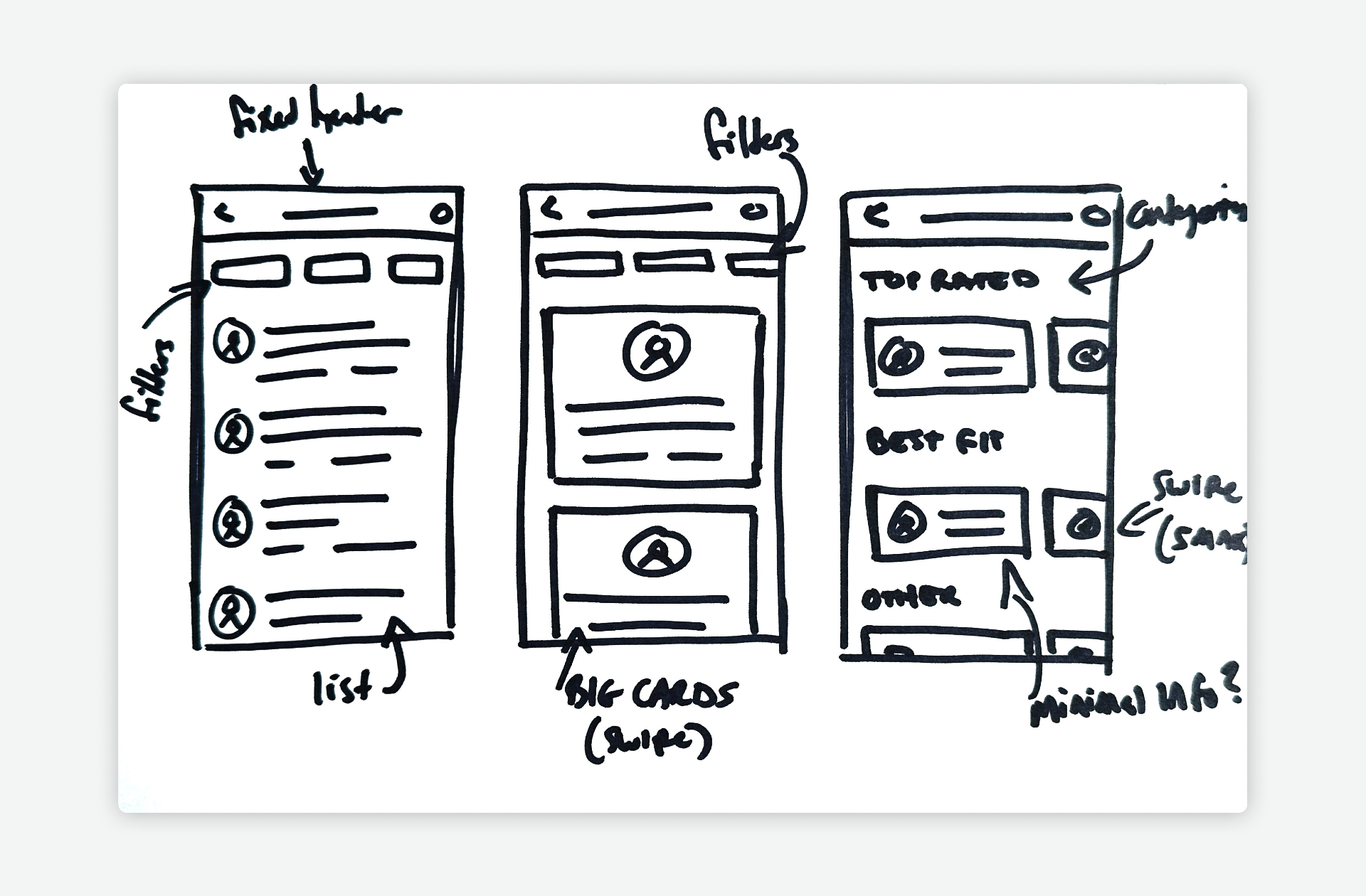
I explored lists, swipe cards, grouping, and navigation to support quick decisions while keeping candidate context available.
Early layout studies
Early layout studiesLists, swipeable cards, and grouped applicants explored before committing to a structure.
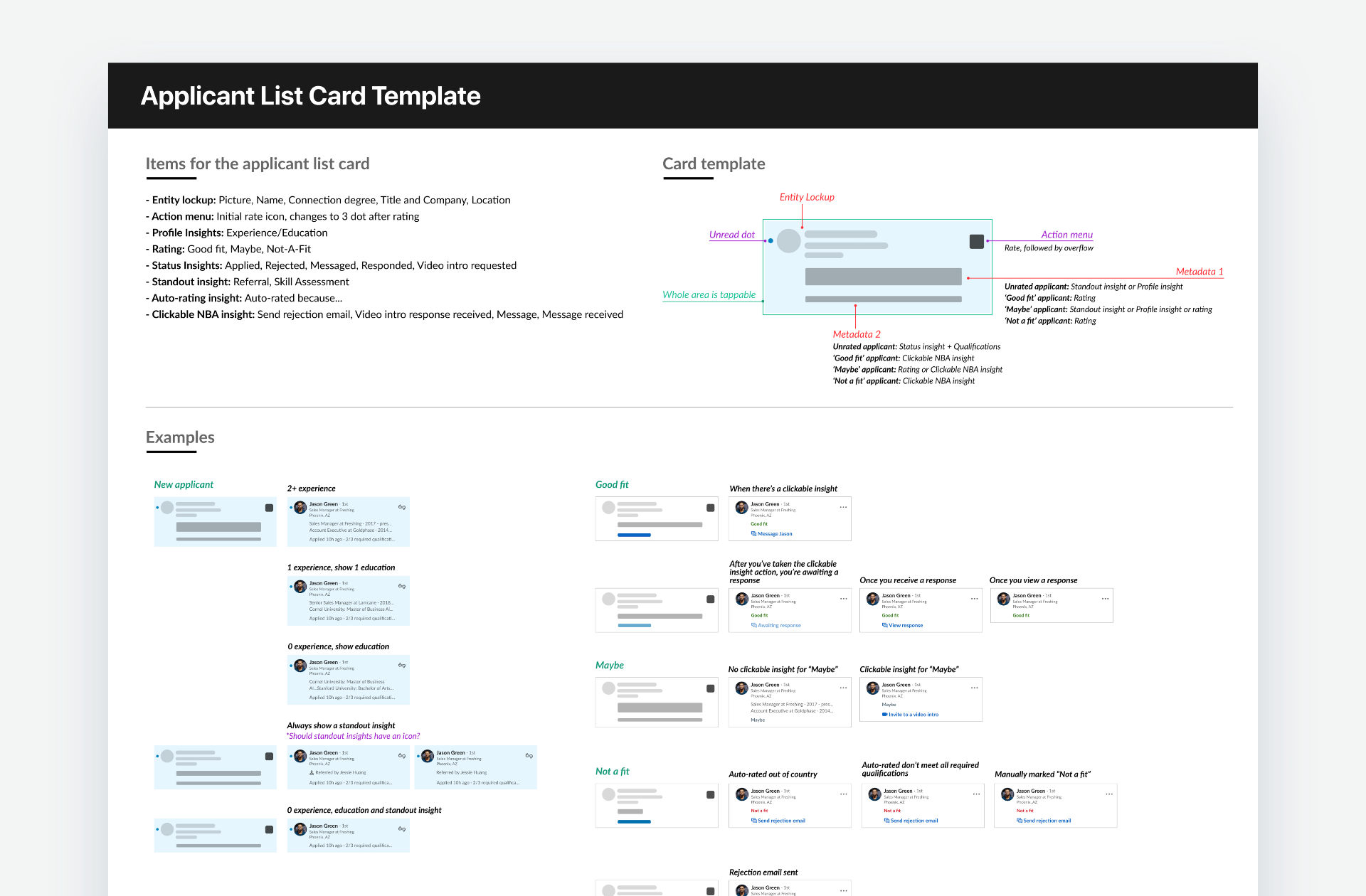
Card anatomy and states
Card anatomy and statesA reusable card structure brings candidate information and status into a consistent hierarchy across the experience.
Mobile concepts
Mobile conceptsApplicant tracking and job management rethought for a phone in hand.
Explore the details
1 / 1
What did not ship
What did not shipDenser lists, tab-based navigation, and a filter sheet that added more work than clarity.
03 / Research and scope

Design around the small-business day.

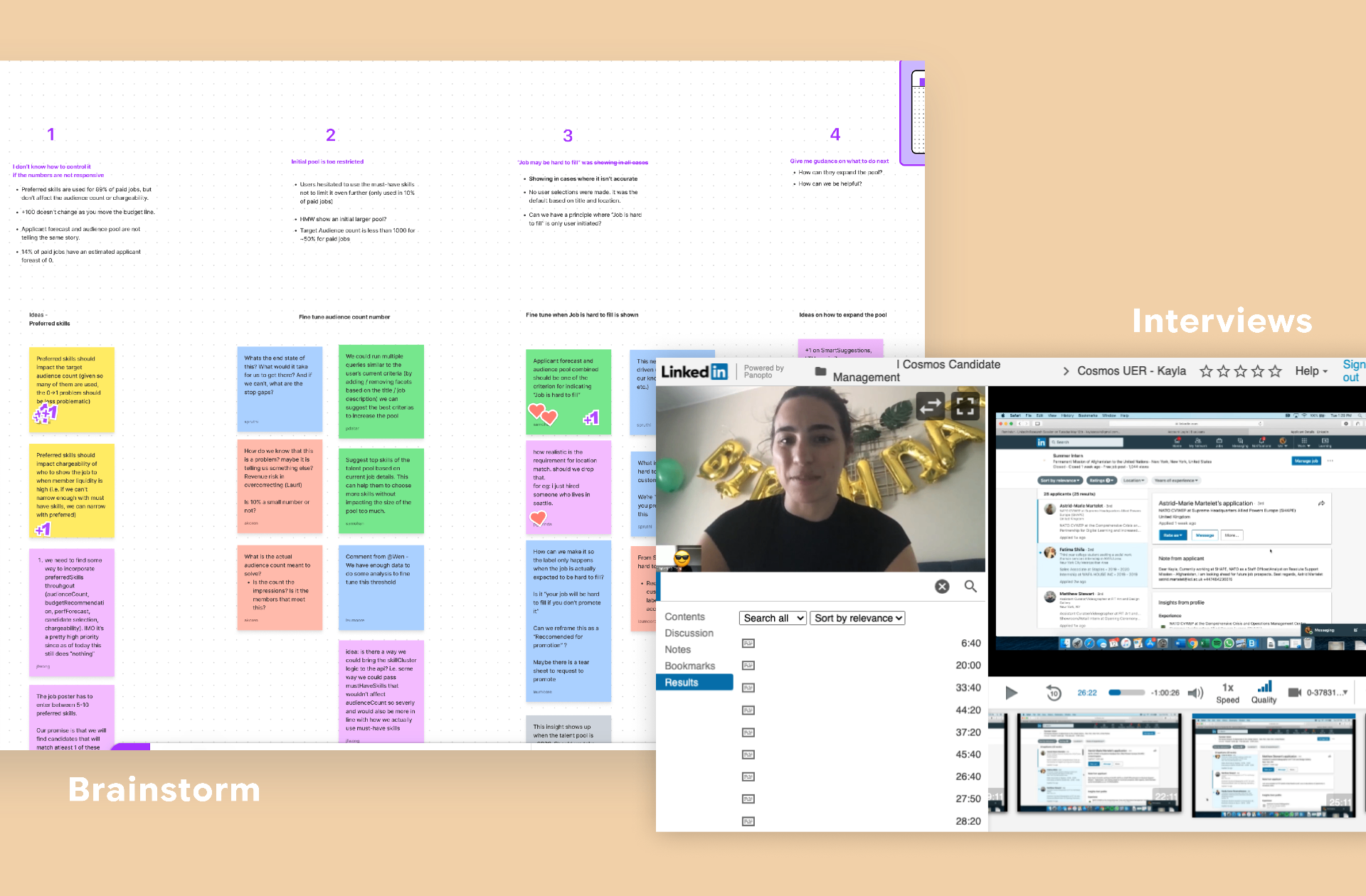
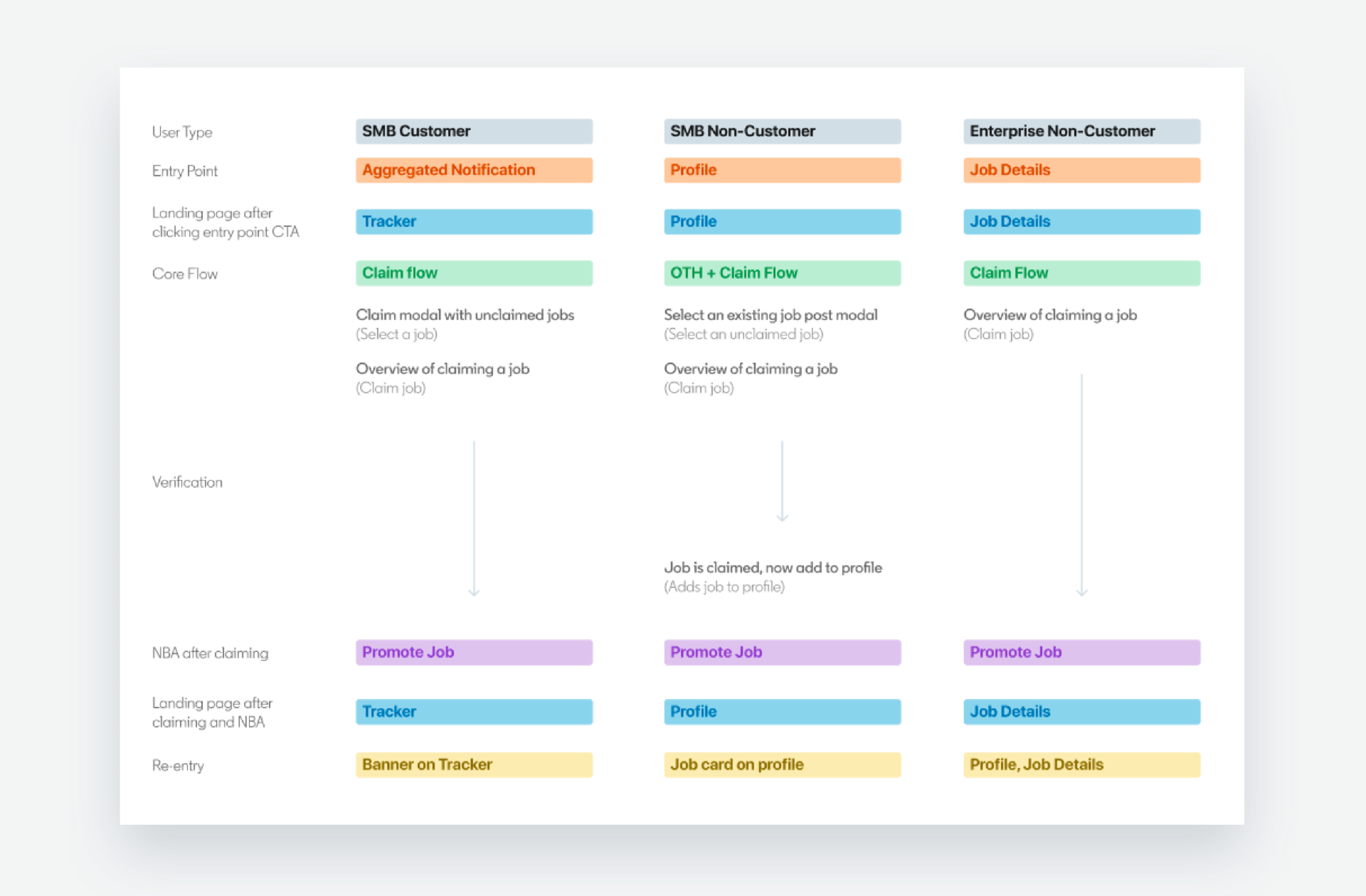
Interviews and journey mapping compared small-business customers, non-customers, and enterprise customers. Their differences made a dedicated small-business workflow essential.
Where hiring broke down
Where hiring broke downBrainstorms and recruiter interviews mapped moments of friction and uncertainty.
Three journeys, one product
Three journeys, one productComparing SMB customers, non-customers, and enterprise customers revealed where a different path was needed.
The impact

Making it easier to move from review to hiring.

The project reported improvements in both employer response and successful hires. The mobile interaction model also extended into a desktop MVP. The thirty-second review remained a design target, not a measured result.

Employer response rate
+185%
Reported project improvement.
Successful hires
+60%
Reported project increase.
A shared hiring workflow
iOS + Android
Extended into a desktop MVP.
Beyond the MVP

Exploring new ways to keep hiring moving.

These later concepts explore AI-assisted outreach, a more connected hiring journey, and wrist-based triage. They are separate from the shipped experience.

Connecting applicant review and outreachPrototype: a connected hiring flow from posting through hire.
AI copilot for hiringConcept: drafting outreach, summarizing candidates, and suggesting a useful next action.
Hiring from the wristConcept: quick applicant triage and replies in the moments between tasks.

Next project

ATLAS

Rebuilding a global learning platform

A clearer learning experience and a reusable design system across more than 50 markets.

Explore the case study